
How to Value a Coin Collection
Owner, Exclusive Coins
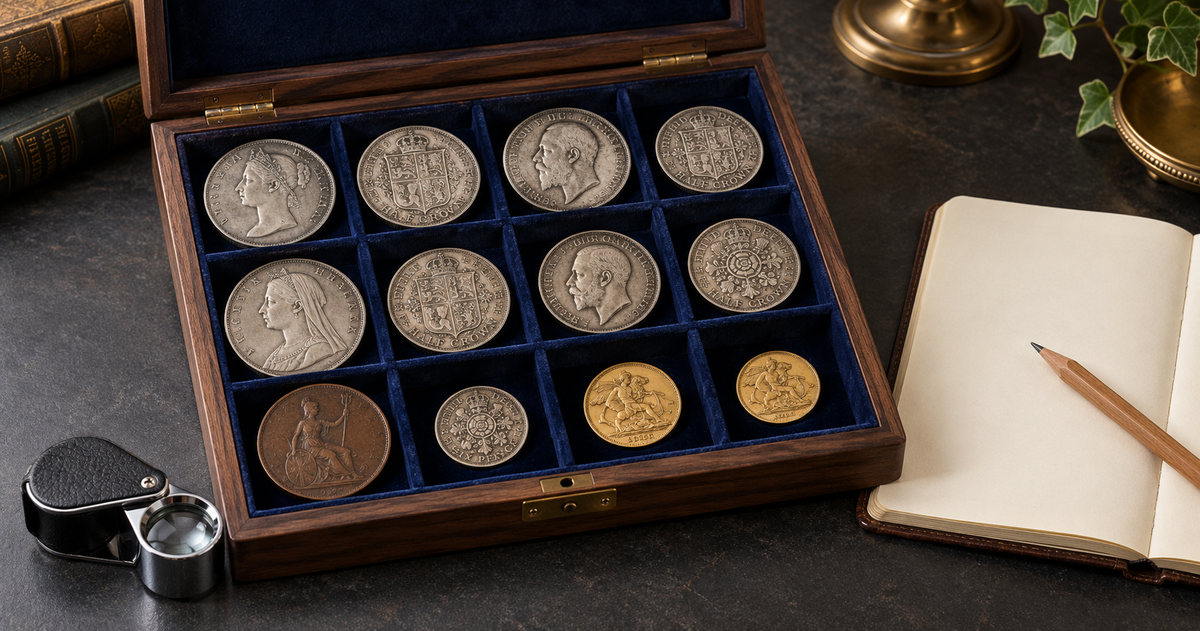
You have a drawer, a tin, a box in the loft or a family collection, and you want to know what it is worth. The temptation is to search a few coins online and add up the prices you see. Please do not. Asking prices are not sale prices, condition changes everything, and the single biggest mistake owners make is selling before they know what they have.
This guide gives you a simple, reliable way to value a coin collection yourself, so you can talk to a dealer knowing what matters and what does not.
Start by understanding the two kinds of value
Every coin has up to two values, and mixing them up is the cause of most disappointment.
- Bullion value (metal value) is the weight of precious metal multiplied by the current price. A gold sovereign contains about 7.32g of pure gold, for example, and its metal value moves with the gold price every day.
- Collector value (numismatic value) is what a collector will pay for rarity, date, condition, mint mark or grade. It can be far above the metal value, or nothing at all.
Gold and silver coins always have a floor from their metal. Cupro-nickel and copper coins usually do not, so they are only valuable when the coin itself is scarce.
Step 1: List what you have
Write down each coin's type, date, denomination and metal. For a large collection, a simple spreadsheet is enough. Note any boxes, capsules, albums, certificates or paperwork too, since original packaging adds value to proof coins and sets. Do not rearrange coins from their holders to make the list.
Step 2: Sort by metal
- Gold coins: sovereigns, half sovereigns, Britannias, Krugerrands, Maple Leafs and others. These are usually the most valuable items in any collection.
- Silver coins: pre-1920 British silver is .925 sterling and 1920 to 1946 coins are .500. Later coins are cupro-nickel. Silver proof coins and sets are worth a look.
- Everything else: copper, bronze and cupro-nickel. Most circulating coins fall here and are usually worth face value or a small premium.
If you do only one thing, set the gold and silver aside from the rest. It tells you where the money is.
Step 3: Look for the coins that can be worth more
- Gold and silver Royal Mint proof sets in their original boxes with certificates.
- Coins graded by PCGS or NGC, which sit in sealed holders with a grade on the label.
- Scarce dates or low-mintage issues, including some 50p and £2 coins, such as the 2009 Kew Gardens 50p.
- Sovereigns with mint marks. See how much a gold sovereign is worth.
Step 4: Check the condition honestly
Condition is the multiplier. A coin with sharp detail and no scratches can be worth several times the same coin that has been worn or cleaned. Hold coins by the edges, look under a bright light and note any wear, marks or damage. Whatever you do, do not clean them. See should you clean old coins for why.
Step 5: Photograph everything
Clear photos of the front and back of each coin, taken in good, even light against a plain background, make a remote valuation far more accurate. Group photos are fine for common coins, but photograph anything you think may be valuable on its own.
Step 6: Use the right evidence for prices
- For bullion coins, compare the offer to the current metal price and ask the dealer to show the maths.
- For collector coins, look at what similar coins actually sold for, not what sellers are asking.
- Be careful with price guides. They are a starting point, and real prices depend on condition.
Step 7: Get a proper valuation
A good valuation explains itself. Ask these questions:
- How much of the figure is metal value, and how much is a collector premium?
- What did you assume about the condition?
- Is there any fee, and how will I be paid?
- Do I have to accept today?
For a large or valuable collection, get more than one opinion. A reputable dealer will not mind.
Mistakes that cost collectors money
- Cleaning or polishing coins before showing them.
- Selling the best coins first and leaving the rest.
- Accepting an offer for "the lot" without a breakdown.
- Not checking whether coins are gold or silver.
- Rushing because someone says the price is only good today.
Frequently asked questions
How long does a valuation take?
If you send photos, we reply within 24 hours. A collection of any size can be assessed from clear photos to start with.
Do I have to post my coins to get a valuation?
No. We value from photos first. If you decide to sell, you can then post the coins fully insured. For larger collections we can arrange a home visit.
What if I only have a few coins?
Still worth asking. A single gold coin or proof set can be worth more than a whole box of circulated coins.
Ready to find out?
Request a free valuation and we reply within 24 hours with no obligation. Or call free on 0800 978 8542. Our guide to where to sell old coins compares your options once you have a value, and if the collection was left to you, read how to sell an inherited coin collection.